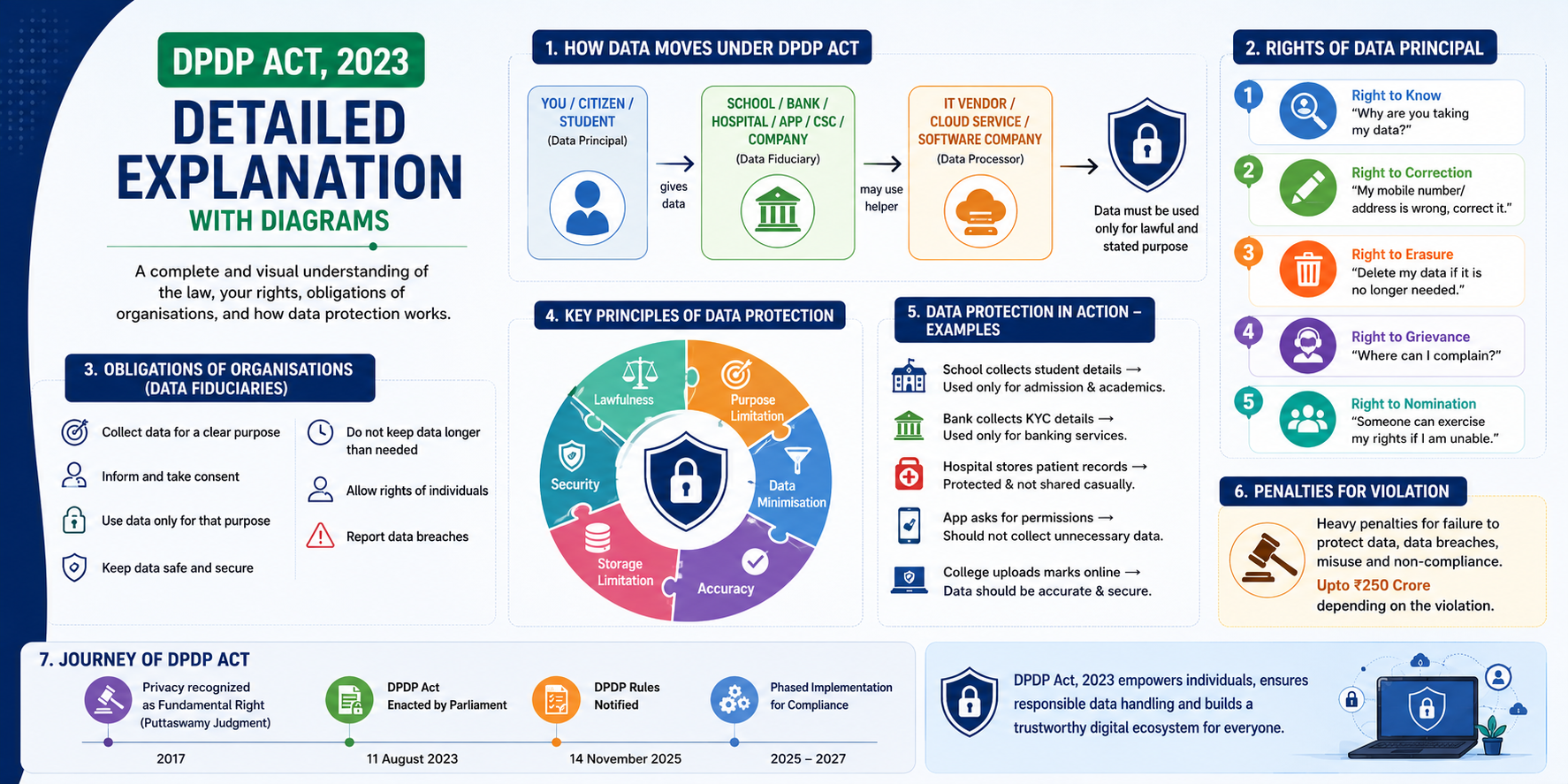
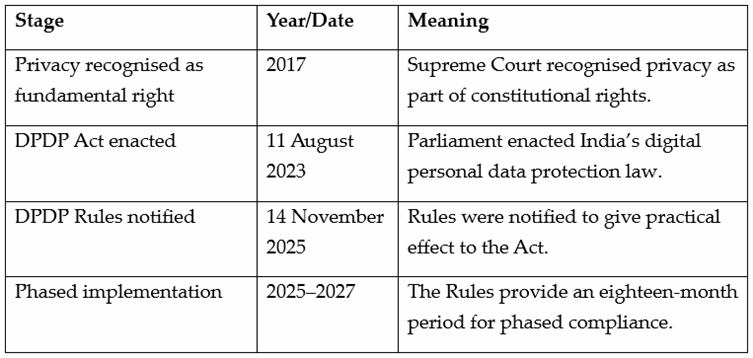
The DPDP Act is India’s main law for protecting digital personal data. In simple words, it says that when any organisation collects your personal information digitally, it must use it carefully, lawfully, and only for a proper purpose. India enacted the DPDP Act on 11 August 2023, and the DPDP Rules were notified on 14 November 2025 to operationalise the law.
1. Why was this law needed?
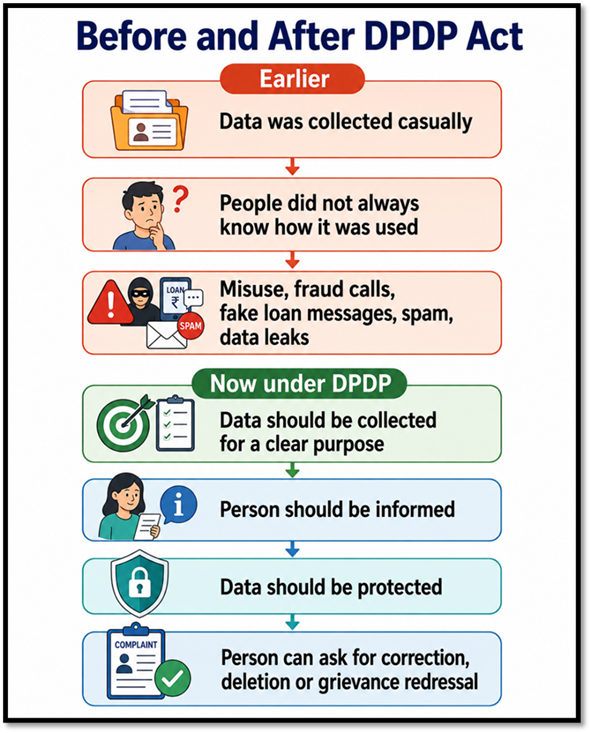
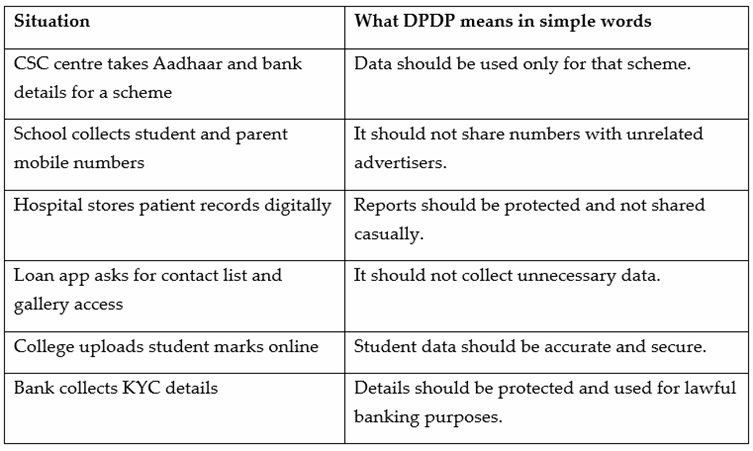
In daily life, even people in rural areas now share personal data for ration cards, Aadhaar-based services, bank accounts, mobile SIM, scholarships, PM-Kisan, hospital records, school admission, online forms, CSC services and government schemes.
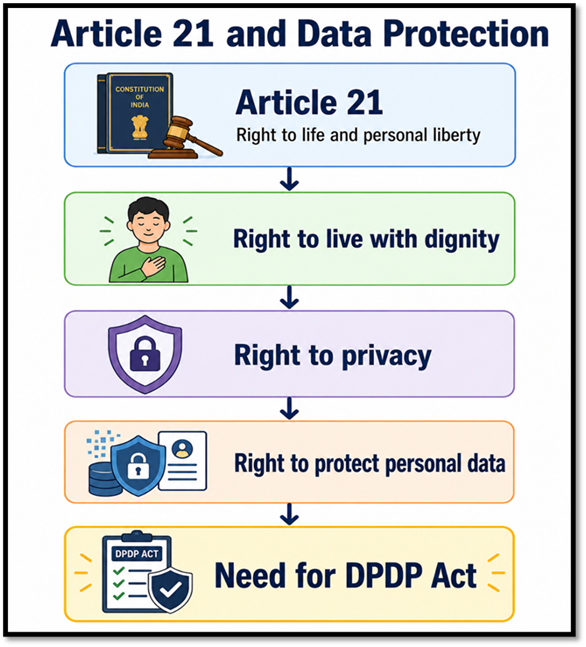
2. Connection with Article 21 and privacy
The Supreme Court in K.S. Puttaswamy v. Union of India recognised privacy as a fundamental right under the Constitution. This means privacy is not only about your house or body, but also about your personal information. This constitutional idea became one of the foundations for India’s data protection law.
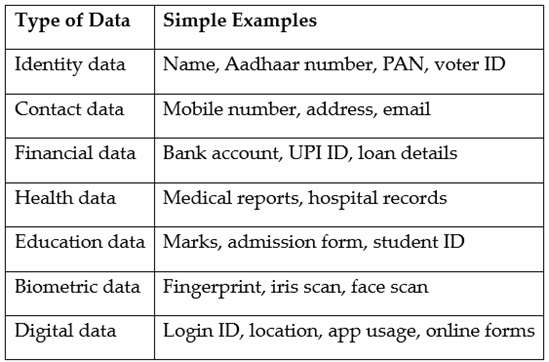
3. What is personal data?
Personal data means any information that can identify a person.
4. How data moves under DPDP Act
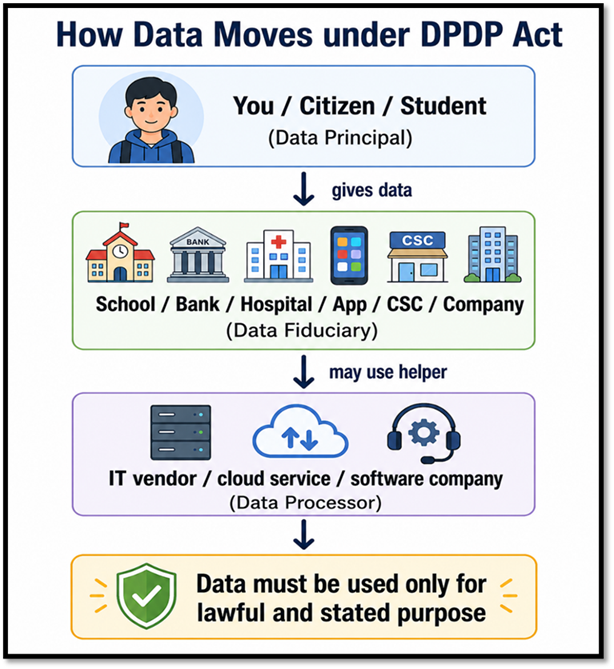
For example, if a student gives her mobile number to a college for admission, the college should use it for admission and academic communication, not casually share it with coaching centres or marketing companies.
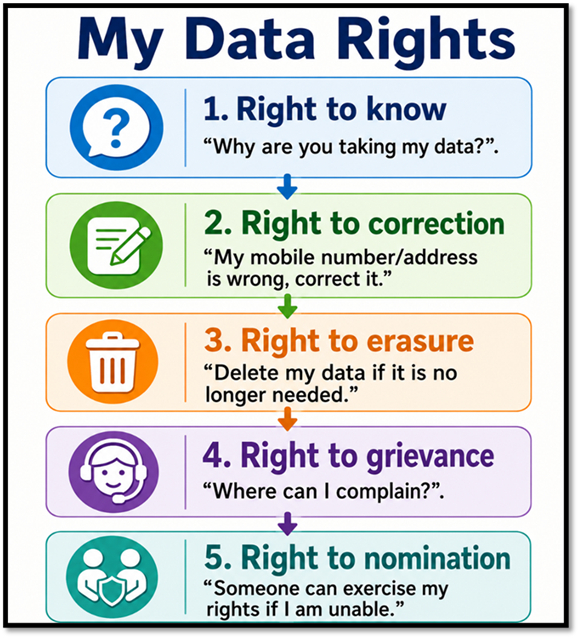
5. Rights of citizens under DPDP Act
The Act gives individuals rights such as the right to know how data is handled, the right to correction, the right to erasure in permitted cases, grievance redressal, and nomination. The Rules also require organisations to respond to certain requests within specified timelines.
6. Indian examples
7. When was DPDP initiated and when is it applied?
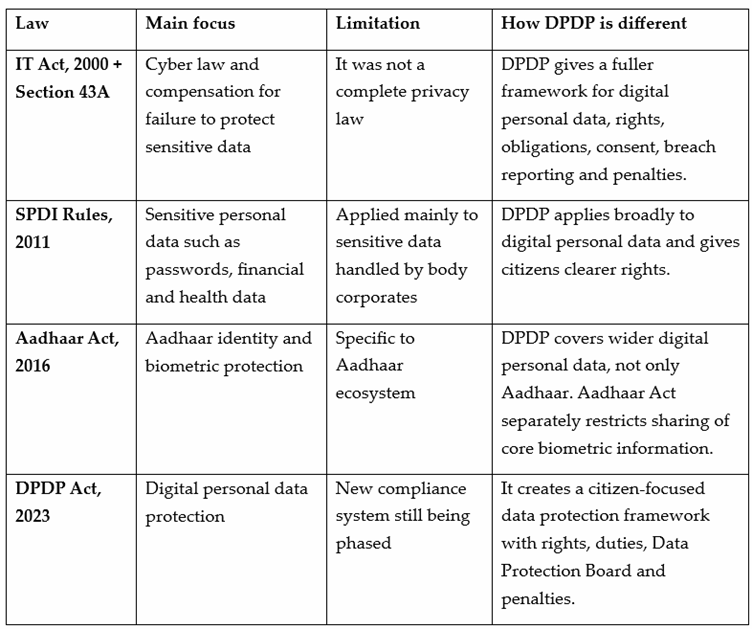
8. Difference between DPDP Act and earlier Indian laws
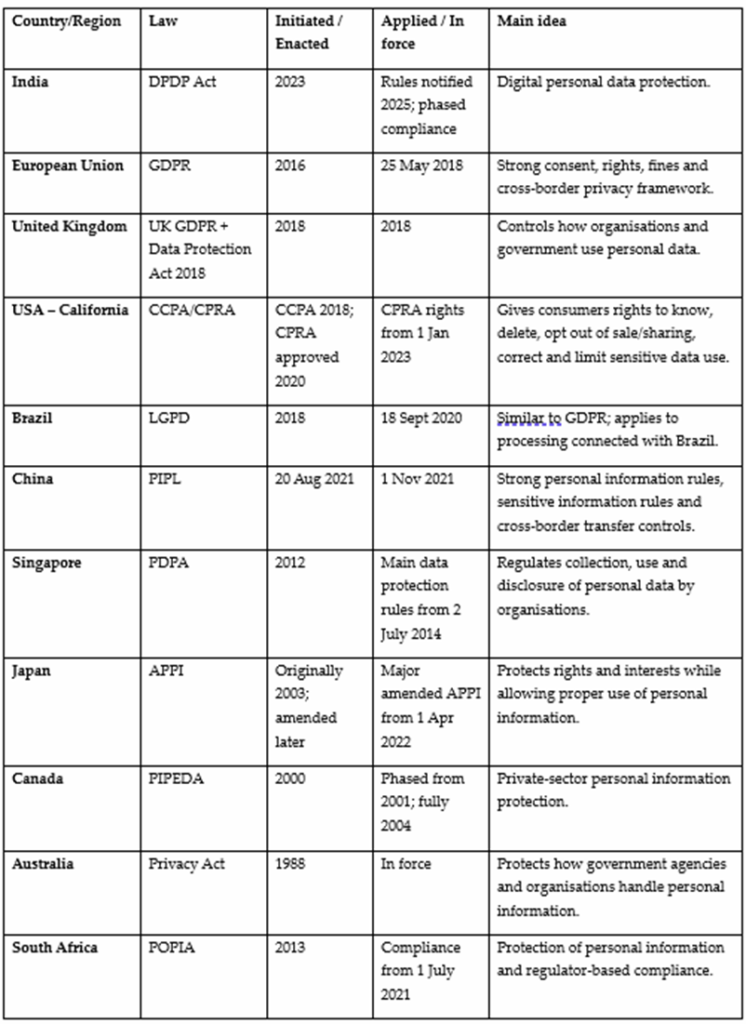
9. Data protection laws in other countries
10. Simple comparison: India DPDP vs GDPR vs CCPA
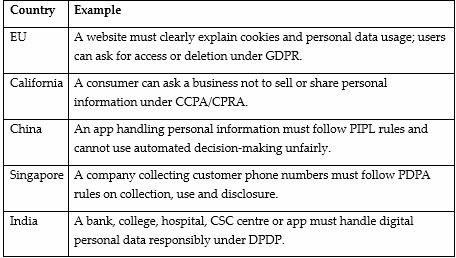
11. Examples from other countries
The DPDP Act protects people in the digital world. It ensures that personal data such as Aadhaar, mobile number, bank details, health records, school records and online information is not collected or used carelessly. For rural citizens, it is very important because most welfare schemes, banking, education, health and government services are now linked with digital records.
“Data protection means respecting a person’s identity, dignity, safety and privacy in the digital age.”
Prepared and shared for academic reading by:
Dr. Arpana Chaturvedi
Associate Professor & HOD – IT & Data Analytics
New Delhi Institute of Management